
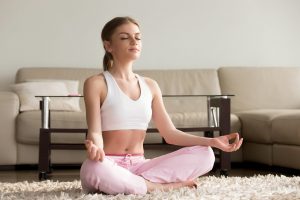
Lock down has been declared in almost every state. The majority of the fortunate ones were ready by stocking up food, groceries, and medications. Most of us were prepared to handle the next few weeks. As I work in a corporate, I used to attend calls and meetings throughout the day. In the lockdown, I realized that my mind and body are going to have a turn to the worse in the upcoming few days.
Also swamped with housework, my job, and my kids, it was really difficult to manage it all. I was becoming frustrated about the ongoing situation. The only light at the end of the tunnel was that of many of my friends, who suggested that I should do Yoga. I started my yoga routine (I am a yoga teacher) and as we all know Yoga helps to reduce anxiety.
Since the 1970s, meditation and other stress-reduction techniques have been
studied as possible treatments for depression and nervousness. One such practice
is yoga. It has received much less attention in the medical literature, even
though it has become more and more popular in recent decades. One national
survey estimated, as an instance, that roughly 7.5% of U.S.
adults had tried yoga at least once, and that almost 4 % practiced yoga in the
preceding year.
You can practise yoga from gentle and accommodating to strenuous and hard; the
alternative of style will be based on physical ability and personal taste. Hatha
yoga, the most common type of yoga practiced in the USA, combines three
components: physical poses, called asanas; controlled breathing practiced in
conjunction with asanas; and a short period of deep relaxation or meditation.
Yoga practices can decrease the effect of exaggerated stress responses and may be
helpful for both anxiety and depression. In my case, yoga acted like other
self-soothing methods, like meditation, relaxation, exercise, or even
socializing with friends.
By reducing perceived anxiety and nervousness, yoga seems to modulate stress
response systems. This, in turn, decreases physiological stimulation — for
example, reducing the heart rate, lowering blood pressure, and easing
respiration. There is also evidence that yoga practices help boost heart rate
variability, an indicator of the body’s ability to respond to pressure more
flexibly.
I read about a small study conducted at the University of Utah that provided some
insight into the impact of yoga on the stress response by taking a look at the
participants’ responses to pain. The researchers noted that people who have a
badly controlled response to stress can also be more sensitive to pain.
When the three groups have been subjected to more or less debilitating thumbnail
pressure, the participants together with fibromyalgia — as anticipated — sensed
pain at reduced pressure levels compared with the other subjects. Functional
MRIs revealed they also had the greatest activity in regions of the brain
associated with the pain response. By comparison, the yoga practitioners had
maximum pain tolerance and lowest pain-related brain activity during the MRI.
The study underscores the value of techniques, such as yoga, that could help a
person regulate their stress and, therefore, pain reactions.
But during the lockdown many people might suffer from anxiety, or stress, and
yoga might be the best way to better manage it. Indeed, the scientific study of
yoga demonstrates mental and physical health are not just closely intertwined
but are essentially equivalent. So start practising yoga today and if you are a
beginner then check out beginners guide from Nobe Yoga
in Miami Beach.